
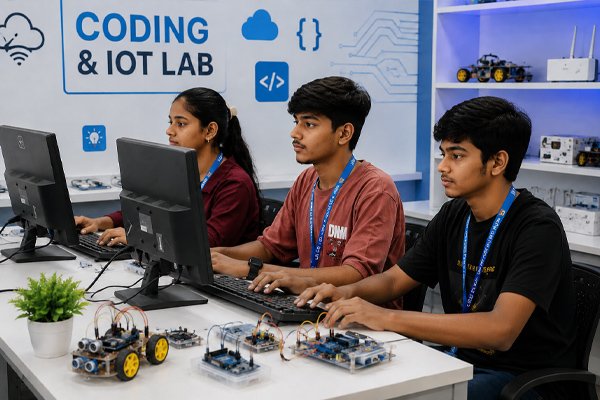
CODING & IOT LAB
Code. Connect. Create.
A software-and-sensor lab that takes students from block-based logic through Python and web development into the Internet of Things — connecting a switch flip in the real world to a dashboard on a screen, the same progression covered in STEMpedia's IoT-for-Kids curriculum track.
1:2
Student-to-device ratio
Gr 2–12
Grade span
12+
IoT hands-on projects/yr
Cloud
Dashboard-linked builds
IOT & Smart
Devices
Sensors & Microcontrollers
Cloud & Automation Projects
Python Programming
What the Coding & IoT Lab actually is?
Coding and IoT are taught together because the second is the natural destination of the first: once a student can write a loop and read a sensor, wiring that sensor to the cloud and a phone dashboard is a short step. The lab covers block-based logic, then Python and web basics, then a full IoT stack — microcontrollers, sensors, Wi-Fi modules and cloud dashboards — so a smart-irrigation or home-automation build is a capstone, not a stretch.
Logic before syntax
Block-based programming builds correct logical thinking before students ever have to remember semicolons or indentation.
Real connected projects
Every IoT unit ends in a genuinely working, cloud-connected build — a smart plant-waterer, a room-occupancy dashboard, a voice-controlled light.
Cybersecurity & data-ethics thread
Every connected project includes a short module on data privacy and safe device use, not just how to make it work.
Portfolio-driven assessment
Students are assessed on working, documented projects rather than syntax quizzes alone.
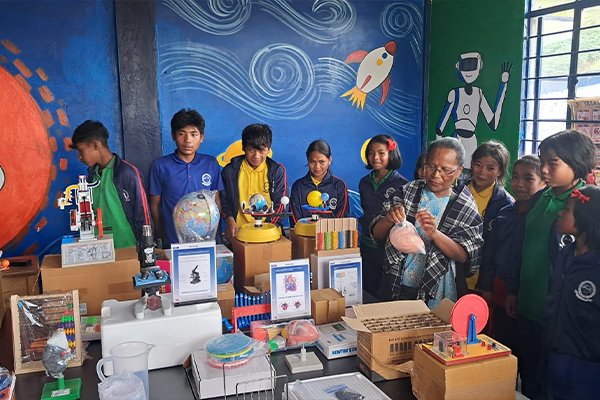
Lab Setup & Equipment
Spec sheet: what gets installed
Every component below ships, is commissioned on-site, and comes with a matching maintenance line item — nothing here is a "coming soon" placeholder.
| DUET STEM · AI & Robotics Lab | Rev. 2026 | |
|---|---|---|
| Component | Specification | Quantity |
| Block-coding & Python workstation | Laptops/desktops with a coding IDE and offline block editor | 1 per 2 students |
| IoT development boards | Wi-Fi enabled microcontrollers with GPIO for sensors | 1 per 2 students |
| Sensor & actuator kit | Moisture, temperature, motion, relay and display modules | 1 kit per 2 students |
| Cloud dashboard subscription | Student-safe IoT dashboard for live data visualisation | 1 seat per student |
| Networking essentials | Dedicated lab router/switch with content-filtered access | 1 per lab |
| Prototyping accessories | Breadboards, jumper wires, enclosures for finished builds | 1 set per 2 students |
| Project showcase kiosk | Screen displaying live student project dashboards | 1 per lab |
Curriculum & Grade Roadmap
A continuous pathway, not one-off
Modules build on each other year over year so a student's grade-10 session assumes and extends what they built in grade-6, rather than repeating fundamentals.
Grades 2–4
Logic BuildersFocus modules
Grades 5–6
CodersFull block-based programming
Grades 7–8
ConnectorsFocus modules
Grades 9–10
NetworkersFocus modules
Grades 11–12
Systems ArchitectsFocus modules
Rollout Journey
How a lab goes from empty room to running programme
Network Readiness Check
Lab-segment Wi-Fi, bandwidth and content-filtering setup
Week 1Workstation & Kit Deployment
Boards, sensors and coding environments installed
Week 2–3Teacher Platform Training
IDE, dashboard admin and safe-connectivity protocols
Week 4Weekly Build Sessions
Grade-wise coding and IoT project sessions begin
Term 1Capstone Demo Day
Live dashboard demonstrations of finished IoT builds
Term 3Skills & Outcomes
What students walk away able to do
Algorithmic thinking
Python programming
Sensor Integration
Cloud Dashboards
Networking Basics
Data Ethics
Debugging
Full-stack thinking
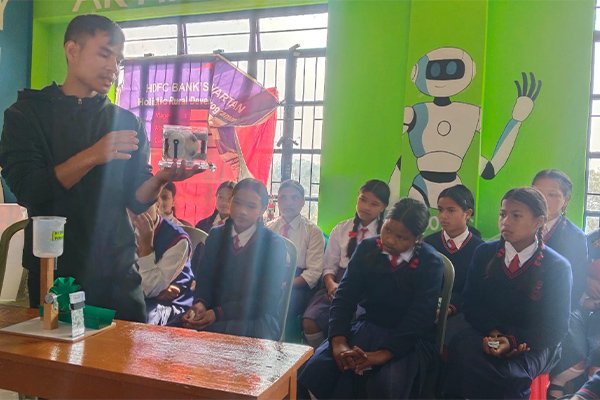
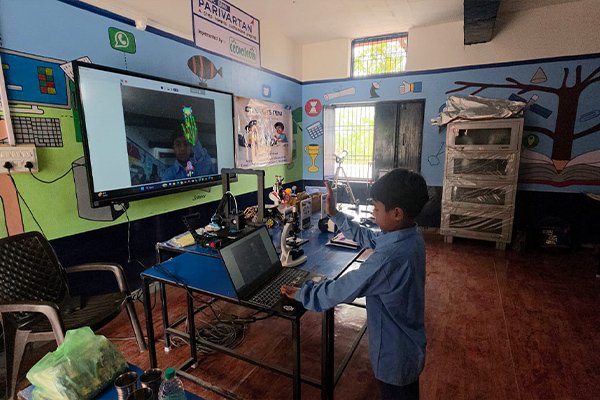
Live practicals
Inside the Lab
Why DUET STEM
How this compares against the market
A feature-level look at how a Coding & IoT Lab from DUET STEM stacks up against the offerings of STEMpedia, STEMROBO, Avishkaar and Robocraze, based on each provider's own published lab specifications.
| Feature | DUET STEM | STEMpedia | STEMROBO | Avishkaar | Robocraze |
|---|---|---|---|---|---|
| Combined coding-to-IoT progression in one curriculum | ✓ Full | ✓ Full | ◐ Partial | — Limited | — Limited |
| Cloud dashboard included per student | ✓ Full | ◐ Partial | ◐ Partial | — Limited | — Limited |
| Data-ethics / cybersecurity module included | ✓ Full | ◐ Partial | — Limited | — Limited | — Limited |
| Content-filtered dedicated lab network setup | ✓ Full | ◐ Partial | — Limited | — Limited | — Limited |
| Portfolio/project-based assessment model | ✓ Full | ✓ Full | ◐ Partial | — Limited | — Limited |
| Capstone demo-day support | ✓ Full | ✓ Full | ◐ Partial | — Limited | — Limited |
Ready to see a Coding & IoT Lab inside your school?
We'll walk your campus, map a grade-wise rollout, and send back a proposal with pricing, timeline and a curriculum sample — usually within five working days.
Transforming Education Through Science & Technology
Transforming classrooms into innovation hubs where imagination meets technology and learning becomes an adventure.
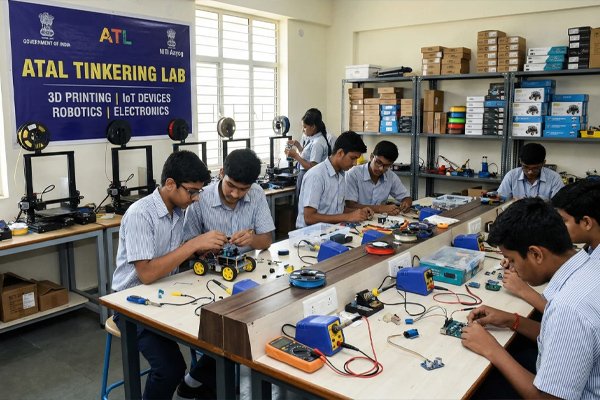
ATL Tinkering Lab
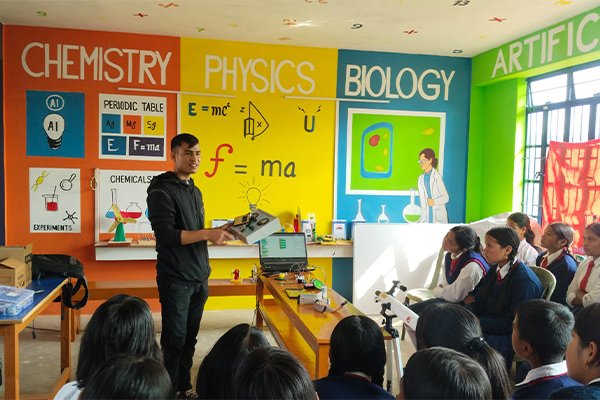
AI & Robotics Lab
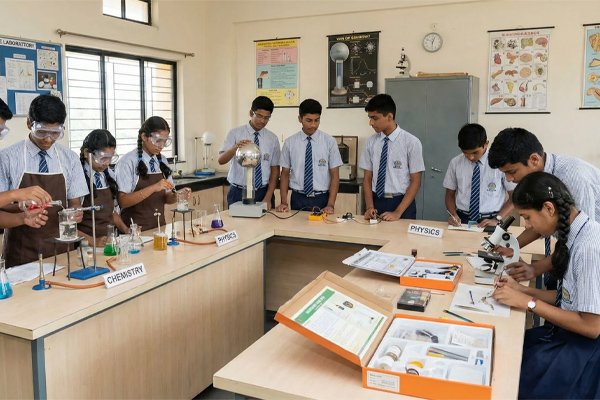
Science Lab
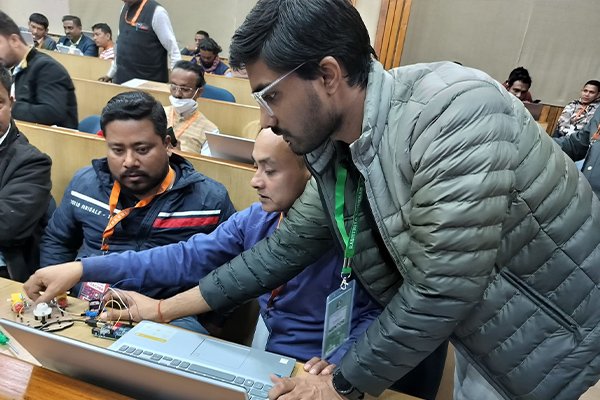
Teacher Training
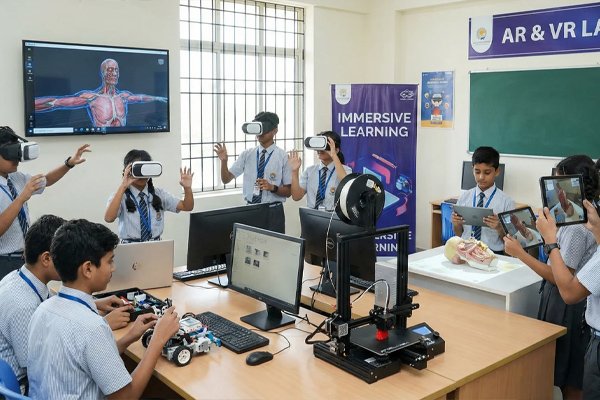
AR & VR Lab
Book a Demo
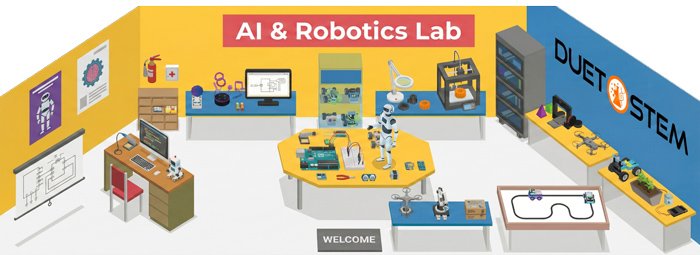
Ready to transform your school's education? Contact us for a demo or any inquiries.
Experience the future of education with the Duet STEM Ecosystem—an innovative Coding, AI, Robotics, and STEM learning solution designed for modern schools. Our education experts will guide you through interactive, hands-on learning experiences that inspire creativity, critical thinking, and innovation.